


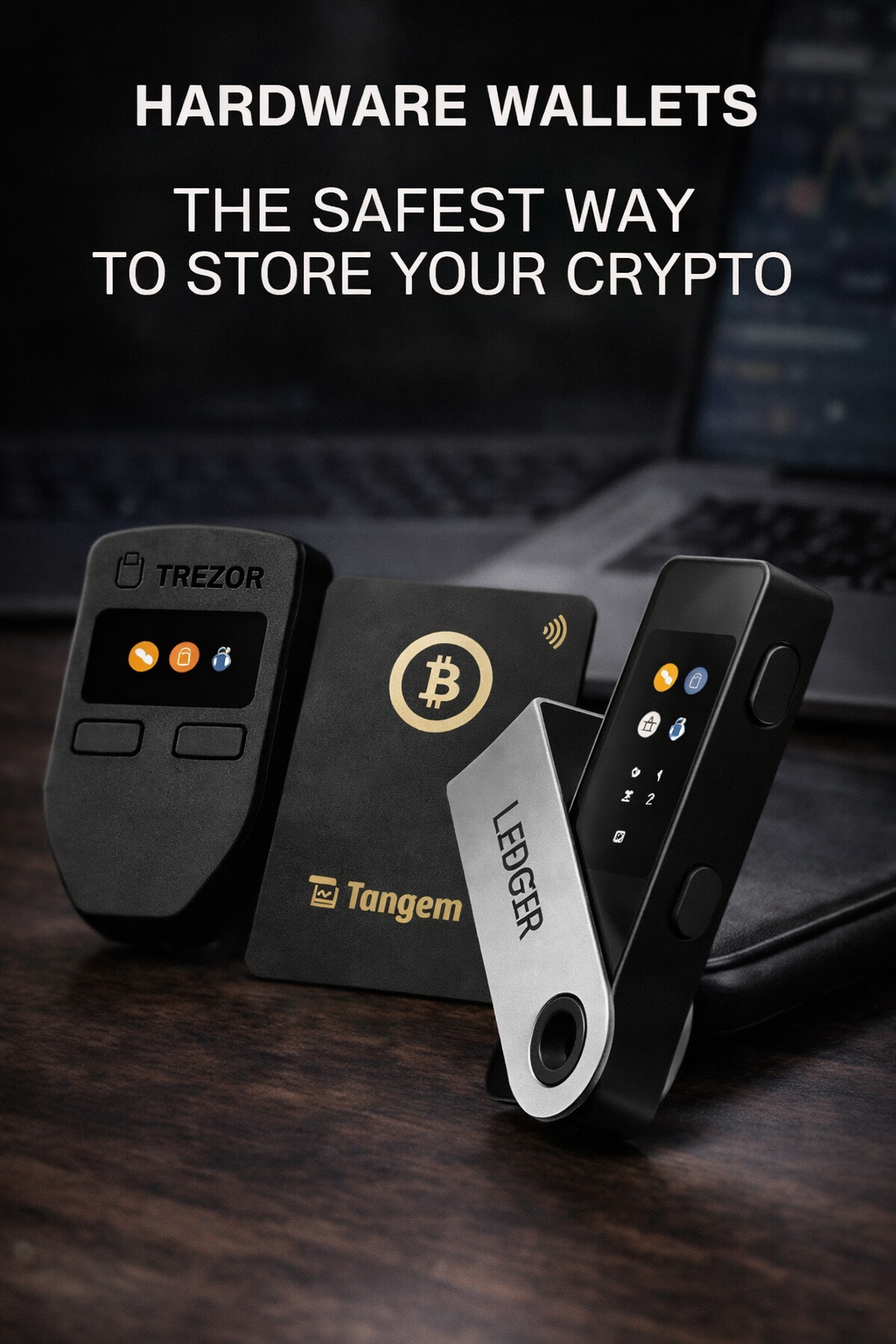
As cryptocurrencies gain wider adoption, one concern continues to dominate discussions among investors: how to securely store digital assets.
Unlike traditional financial accounts that rely on banks or custodians, cryptocurrencies give individuals full control over their funds through private keys. While this decentralization offers financial freedom, it also introduces new security responsibilities.
For many long-term crypto investors, hardware wallets have become one of the most trusted solutions for safeguarding digital assets. These devices store private keys offline, significantly reducing the risk of hacking or theft.
Understanding how hardware wallets work — and why they are considered more secure — is essential for anyone looking to protect their cryptocurrency holdings.
What Is a Hardware Wallet?
A hardware wallet is a physical device designed to securely store cryptocurrency private keys offline.
Unlike software wallets connected to the internet, hardware wallets operate in cold storage, meaning the private keys never leave the device when signing transactions.
When users want to send cryptocurrency, the transaction is signed inside the hardware wallet itself. Only the signed transaction is transmitted to the blockchain network, ensuring that the private keys remain protected.
Because of this design, hardware wallets significantly reduce exposure to many common cybersecurity threats.
Why Online Wallets Can Be Vulnerable
Many cryptocurrency users begin by storing their funds in exchange wallets or mobile wallets, commonly referred to as hot wallets.
Hot wallets are convenient because they allow quick access to funds for trading or transactions. However, because they remain connected to the internet, they are more vulnerable to several risks:
• malware attacks
• phishing scams
• exchange hacks
• compromised devices
Over the past decade, several high-profile crypto exchange breaches have resulted in billions of dollars in losses.
These incidents have reinforced a widely known principle in the crypto community:
“Not your keys, not your coins.”
This phrase highlights the importance of maintaining direct control over private keys rather than relying on third-party platforms.
How Hardware Wallets Improve Security
Hardware wallets address these risks by keeping private keys completely isolated from internet-connected environments.
Most hardware wallet devices incorporate multiple layers of security, including:
• secure chip technology
• PIN protection
• recovery seed backup
• physical confirmation of transactions
Because transactions must be physically approved on the device itself, remote attackers cannot easily manipulate transactions.
Even if a computer becomes infected with malware, the hardware wallet can still prevent unauthorized transfers.
Long-Term Storage for Crypto Investors
Many experienced investors use a hybrid storage approach when managing digital assets.
This strategy typically involves:
• storing long-term holdings in a hardware wallet
• keeping smaller balances in hot wallets for trading or transactions
By separating funds between secure storage and active trading accounts, investors can reduce the risk of losing large holdings while still maintaining flexibility.
This approach is commonly used by both retail investors and institutional crypto funds.
Backup and Recovery: A Critical Step
While hardware wallets significantly improve security, users must still follow best practices when setting up their devices.
During initial setup, the wallet generates a recovery seed phrase, typically consisting of 12 to 24 words.
This phrase acts as a backup that can restore access to funds if the device is lost, damaged, or replaced.
For security reasons, recovery phrases should:
• be written down offline
• never be stored digitally
• never be shared with anyone
Anyone with access to the recovery phrase can potentially control the associated funds.
Growing Adoption of Hardware Wallets
As the cryptocurrency ecosystem matures, hardware wallets are increasingly viewed as an essential tool for long-term investors.
With digital assets reaching billions in market value, security solutions that combine ease of use with strong protection have become increasingly important.
Hardware wallets are now widely used by individuals, institutional investors, and crypto funds seeking to protect digital assets against cyber threats.
Their popularity reflects a broader trend toward self-custody, where investors maintain full control over their assets without relying on centralized intermediaries.
How Crypto Investors Are Strengthening Security
Security awareness has increased significantly within the cryptocurrency community.
Investors are becoming more proactive about protecting their assets by adopting safer storage practices, including hardware wallets and cold storage solutions.
As cryptocurrency adoption grows, the importance of wallet security is likely to remain a central topic for both new and experienced investors.
Understanding how to secure private keys and manage digital assets responsibly is now considered one of the most important skills for navigating the crypto economy.
Why Crypto Security Matters More Than Ever
Unlike traditional banking systems, blockchain transactions are irreversible. Once funds are transferred, they cannot easily be recovered.
This makes wallet security one of the most important aspects of cryptocurrency ownership.
For many investors, hardware wallets represent the safest available method for protecting digital assets while maintaining full ownership and control.
As the digital asset ecosystem continues to evolve, tools that help users manage security effectively will play a critical role in supporting broader crypto adoption.