


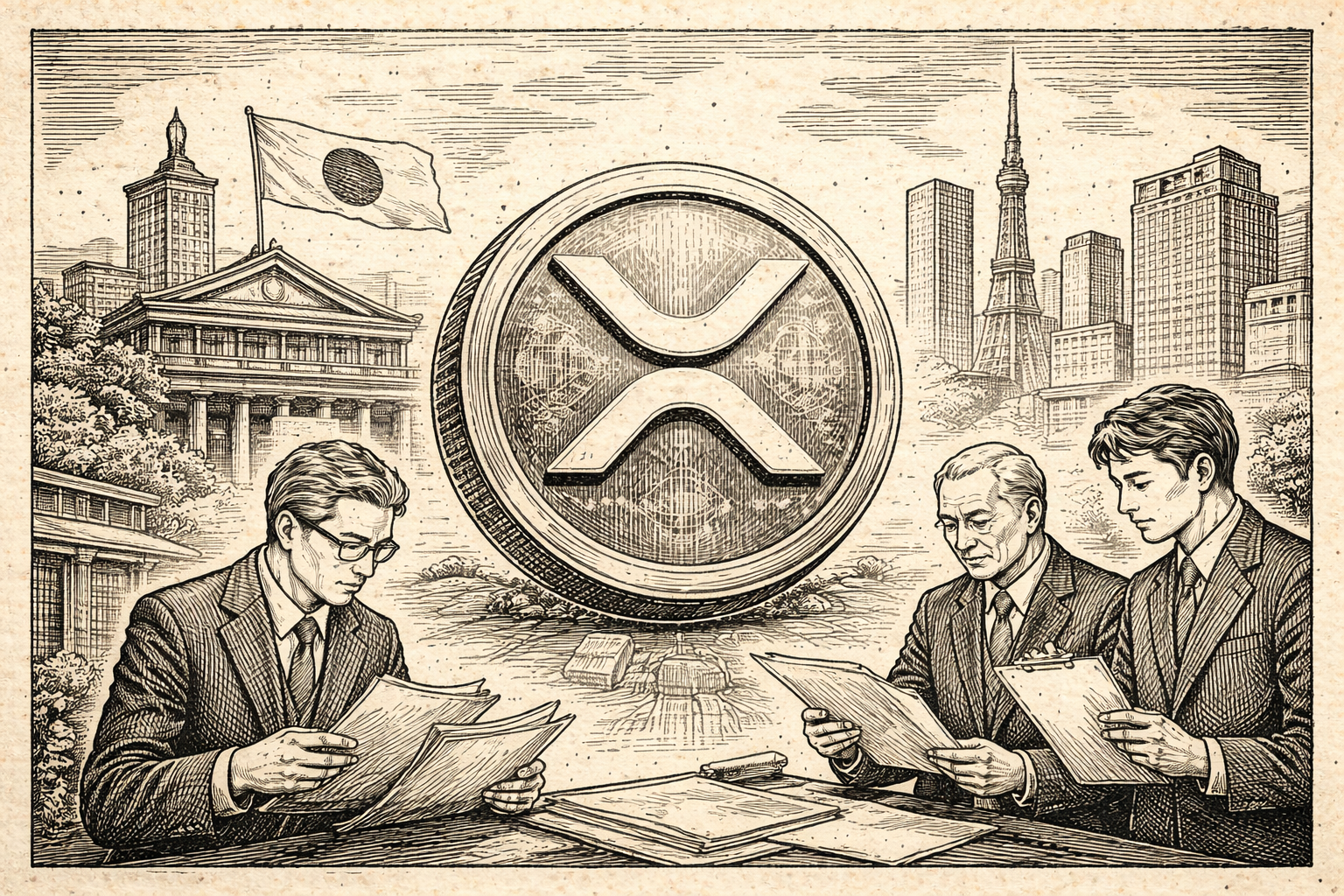
Japan is preparing to implement a significant change in how digital assets are regulated, with XRP expected to be reclassified as a financial product under a new framework set to take effect imminently.
The move represents more than just a technical adjustment — it signals a broader shift in how cryptocurrencies are being integrated into formal financial systems.
As one of the earliest adopters of crypto regulation, Japan’s policy decisions often carry global influence. This latest development is no exception.
What Reclassification Actually Means
Reclassifying XRP as a financial product would place it under a more structured regulatory framework, similar to traditional financial instruments.
This could include:
- Clearer rules around trading and custody
- Stronger investor protection measures
- Greater oversight from financial regulators
- Standardized compliance requirements
Rather than existing in a gray area, XRP would be treated as part of the regulated financial system.
That distinction is critical.
Why Japan’s Role Matters Globally
Japan has long been seen as a leader in crypto regulation.
Unlike many countries that have taken a cautious or enforcement-based approach, Japan has focused on:
- Creating clear licensing systems
- Supporting exchange operations
- Encouraging innovation within defined rules
Because of this, regulatory decisions in Japan are often viewed as a blueprint for other markets.
If XRP is successfully integrated into this framework, it could influence how other jurisdictions approach similar classifications.
A Different Approach to Digital Assets
One of the most notable aspects of Japan’s regulatory philosophy is its willingness to treat digital assets as legitimate components of the financial system — rather than speculative outliers.
This contrasts with ongoing debates in other regions, where classification issues remain unresolved.
By formally recognizing assets like XRP within a regulated structure, Japan may be signaling a more mature phase of crypto adoption.
What This Could Mean for XRP
For XRP, the implications could be significant.
A regulated classification may:
- Increase institutional confidence
- Improve market credibility
- Expand access through regulated platforms
- Reduce regulatory uncertainty
At the same time, it may also introduce stricter compliance requirements.
This dual effect — greater legitimacy paired with tighter oversight — is common when assets transition into formal financial categories.
Institutional Interest Could Follow
Regulatory clarity is often a key driver of institutional participation.
Financial institutions typically require:
- Defined legal status
- Clear compliance frameworks
- Reduced regulatory risk
Japan’s move could make XRP more accessible to institutional players operating within regulated environments.
This does not guarantee immediate inflows, but it removes one of the primary barriers to entry.
How Markets Are Interpreting the Move
News of regulatory developments often leads to increased attention from traders and investors.
In the case of XRP, market participants may interpret this move as:
- A signal of growing acceptance
- A potential catalyst for adoption
- An indication of long-term viability
However, as with any regulatory change, the real impact will depend on how the framework is implemented and adopted over time.
Why This Matters for the Broader Crypto Industry
Japan’s decision is part of a larger trend.
Governments around the world are moving toward clearer definitions and classifications for digital assets.
Rather than asking whether crypto should be regulated, the focus is shifting to how it should be regulated.
Moves like this contribute to:
- Greater market stability
- Increased investor confidence
- More structured industry growth
The Bigger Picture: Regulation Is Maturing
The reclassification of XRP highlights a key evolution in the crypto space.
The industry is moving from:
➡️ Experimental and loosely defined
To:
➡️ Structured and integrated within financial systems
This transition is essential for long-term adoption.
What Comes Next
As the new classification takes effect, attention will shift toward implementation.
Key areas to watch include:
- How exchanges adapt to the new framework
- Whether institutions begin to engage more actively
- How other countries respond to Japan’s approach
Because in global finance, regulatory moves rarely happen in isolation.
Final Thought
Japan’s decision is not just about XRP.
It is about the broader direction of the crypto industry.
And if history is any guide, when regulatory clarity increases, the entire market tends to evolve with it.